
The Essentials of Professional Development Plans: Your Career Growth Framework
- Alinda Mashiku
- Feb 16
- 4 min read
Starting your career journey can feel like standing at a crossroads with countless paths ahead. How do you choose the right direction? How do you ensure steady progress? The answer lies in crafting a solid professional development plan. This plan is your personal roadmap, guiding you step-by-step toward your professional goals. It’s not just about dreaming big—it’s about planning smart and acting decisively.
A career development plan is more than a list of goals. It’s a dynamic, evolving strategy that helps you identify your strengths, improve your skills, and seize opportunities. Whether you’re a high school student exploring options, a college student preparing for the job market, or an early career professional aiming to climb the ladder, a well-structured plan is your secret weapon.
Let’s dive into the essentials of career development plans and explore how you can build your own career growth framework to launch your future with confidence!
Why You Need a Career Growth Framework
A career growth framework is your structured approach to professional development. It breaks down your ambitions into manageable steps and keeps you focused. Without it, you risk drifting aimlessly or missing key opportunities.
Think of it like training for a marathon. You wouldn’t just wake up on race day and run 26.2 miles without preparation. You’d follow a training schedule, build endurance, and track your progress. Your career needs the same kind of preparation.
Here’s why a career growth framework matters:
Clarity: It helps you define what success looks like for you.
Focus: It keeps you on track, avoiding distractions.
Motivation: Seeing progress fuels your drive.
Adaptability: It allows you to adjust as your goals evolve.
Confidence: Knowing your plan reduces anxiety about the future.
By adopting a career growth framework, you’re setting yourself up for steady, intentional progress. You’re not just hoping for success—you’re planning for it.

Building Your Career Development Plan: Step-by-Step
Creating a career development plan might seem overwhelming, but breaking it down makes it manageable. Here’s a simple, actionable process to get you started:
1. Self-Assessment
Start by understanding yourself. What are your strengths? What skills do you enjoy using? What values drive you? Reflect on your interests, personality, and experiences.
Take personality tests like Myers-Briggs or StrengthsFinder.
List your skills and achievements.
Identify areas for improvement.
2. Set Clear Goals
Define your short-term and long-term career goals. Be specific and realistic.
Short-term goals: Complete an internship, learn a new software, improve public speaking.
Long-term goals: Become a project manager, start your own business, earn a master’s degree.
Use the SMART criteria: Specific, Measurable, Achievable, Relevant, Time-bound.
3. Identify Required Skills and Experience
Research the skills and qualifications needed for your target roles. This might include technical skills, certifications, or soft skills like leadership.
Look at job descriptions.
Talk to professionals in your field.
Join relevant workshops or courses.
4. Create an Action Plan
Outline the steps you need to take to reach your goals. Include timelines and resources.
Enroll in classes.
Seek mentorship.
Gain relevant experience through volunteering or part-time jobs.
5. Monitor and Adjust
Regularly review your plan. Celebrate wins and adjust your goals as needed. Life changes, and so should your plan.
Remember, a career development plan is a living document. Keep it flexible and revisit it often.
How to Use ExcelliSpace's Professional Development Plan Framework Effectively
ExcelliSpace's PDP framework is a powerful tool, but only if you use it actively. Here’s how to make the most of it:
Stay Committed: Treat your plan like a contract with yourself. Dedicate time monthly or quarterly to review and update it.
Seek Feedback: Share your plan with mentors, advisors, or trusted peers. Their insights can help you refine your approach.
Track Progress: Use journals, apps, or spreadsheets to log achievements and setbacks.
Celebrate Milestones: Recognize your progress to stay motivated.
Be Open to Change: Your interests and circumstances may shift. Adapt your plan accordingly.
By following these practices, your career development plan becomes a living guide, not just a piece of paper.
Real-Life Examples: Professional Development Plans in Action
Let’s look at some examples to see how a professional development plan works in real life.
Example 1: High School Student Interested in Engineering
Self-Assessment: Strong in math and science, enjoys problem-solving.
Goals: Get into a top engineering college, join robotics club.
Skills Needed: Advanced math, coding basics, teamwork.
Action Plan: Take AP math and physics, learn Python online, participate in science fairs.
Review: Adjust based on college application feedback.
Example 2: College Student Aspiring to Marketing
Self-Assessment: Creative, good communication skills.
Goals: Secure a summer internship, build a personal brand.
Skills Needed: Social media marketing, content creation, analytics.
Action Plan: Take marketing electives, start a blog, apply for internships.
Review: Seek mentor advice, update resume regularly.
Example 3: Early Career Professional in IT
Self-Assessment: Experienced in software development, wants leadership role.
Goals: Become a team lead in 2 years.
Skills Needed: Project management, leadership, advanced coding.
Action Plan: Enroll in PMP certification, lead small projects, attend leadership workshops.
Review: Get feedback from supervisors, adjust goals as needed.
These examples show how tailored and actionable a career development plan can be. Your plan should reflect your unique path and ambitions.
Taking Charge of Your Future Starts Today
Your career is your journey. It’s full of possibilities, challenges, and growth. A career development plan is your compass, your map, and your motivation all rolled into one. It empowers you to take control, make informed decisions, and move forward with confidence.
Remember, the best time to start planning your career is now. Don’t wait for the perfect moment or the perfect job. Build your plan, take small steps, and keep moving. Your future self will thank you!
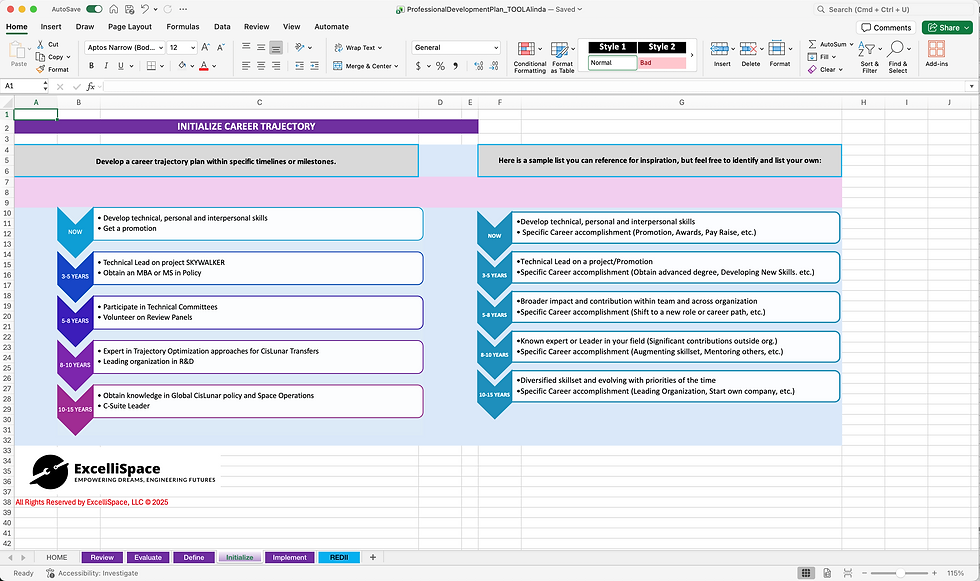
If you want a structured way to begin, check out ExcelliSpace's professional development plan to guide you through the process.
You’ve got this! Your career growth framework is waiting to be built. Start today, and watch your dreams turn into reality.



Comments